

It doesn’t seem that long ago that we were all sweating through a hot, humid summer. Now here we are with colder temperatures and a shifting focus to staying warm, understanding wind chill, avoiding cold-related stress illnesses, and yes, still maintaining your hydration levels!
From 2006 to 2010, there were 10,649 deaths in the United States attributed to natural weather causes, with two-thirds of them associated with excessive cold. When the body is exposed to colder temperatures, it tends to lose heat faster than it can produce it. Prolonged exposure can eventually cause the body to use up its stored energy. This energy decrease and lower body temperature can make an individual unable to think clearly, move effectively through their environment, and even lead to injury or death. This is a concern, as our occupations may require us to work in cold outdoor environments. Therefore, we need to understand what cold stress is, treatment options for cold-related illnesses, and the means available to mitigate our exposure to the cold.
WIND CHILL, BODY RESPONSE & RISK FACTORS
Wind chill is defined as the temperature your body feels when air temperature and wind speed are combined. For example, if the air temperature outside is 40°F, and the wind speed is 35 mph, the effect that your exposed skin would feel is the equivalent of the air temperature being 28°F. That 12-degree difference from cold stress can affect our skin temperature and, if ignored, eventually lead to a drop in our core body temperature. It may even lead to some serious health problems, cause damage to various body tissues, and possibly lead to death.
When it's cold outside, our bodies use most of their energy to keep their core body temperature up. To do this, the body will begin to shift blood flow from our extremities (fingers, hands, arms, toes, feet, and legs) and skin to our core (abdomen and chest). It's this shift that allows our exposed skin to cool more rapidly, thereby increasing the risk of a cold-related illness.
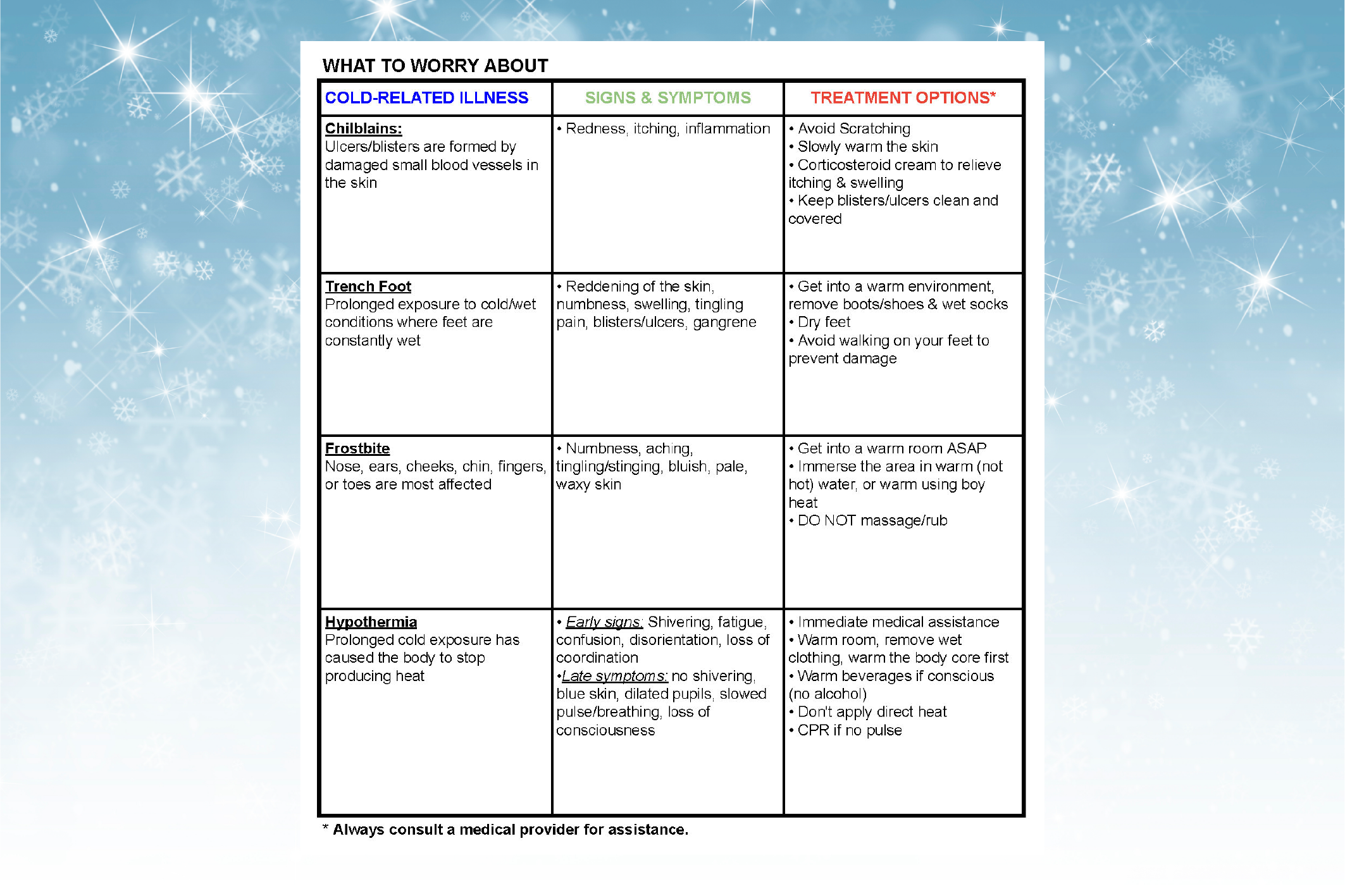
Individuals who suffer from health conditions such as hypertension, hyperthyroidism, or diabetes, are in poor physical condition, are dressed improperly, suffer from exhaustion, or whose body parts are in a wet/damp state, can be predisposed to cold-related illnesses.
SAFETY TIPS FOR WORKERS
This time of year, it is nearly impossible to avoid cold working environments. However, the recommendations below can help protect you from cold stress:
Wear appropriate clothing and protect the ears, face, hands, and feet
During work breaks, move into warm locations
Don't touch cold metal surfaces with your bare skin
Carry warm liquids and cold-weather gear with you
Check your first-aid kit for a thermometer and a hot pack
Monitor your physical condition and that of your coworkers
article written by Tom Monagan, MS, LAT, ATC, CEAS I
