

There is a theme in strength training that the way we move determines how well we feel. Pain in the knees or lower back can discourage people from lifting, exercising, or even completing daily tasks, and what once felt routine can quickly become uncomfortable. This discomfort becomes a barrier for many, making the front squat essential to refining our movement patterns to a pattern that allows us to build strength and stability, reducing joint stressors. This variation of the traditional back squat encourages a more upright posture, reduces loading on vulnerable joints, and offers a safer path to rebuilding lower-body strength. Adding a box or bench to the exercise makes it one of the safest ways to improve lower-body strength and stability.
Many individuals assume they must stop squatting altogether when pain appears. In reality, the problem is often not the act of squatting but the mechanics of the movement. Traditional back squats require the torso to lean forward to keep the bar balanced, which increases stress on the lumbar spine. For someone experiencing irritation or stiffness in the lower back, that extra forward lean may be enough to trigger discomfort. The front squat changes this dynamic entirely. By transitioning the weight to the front of the shoulders, the lifter is forced to naturally stay upright. Research confirms that front squats generate lower spinal compressive forces than back squats at similar relative loads (Gullett et al., 2009).
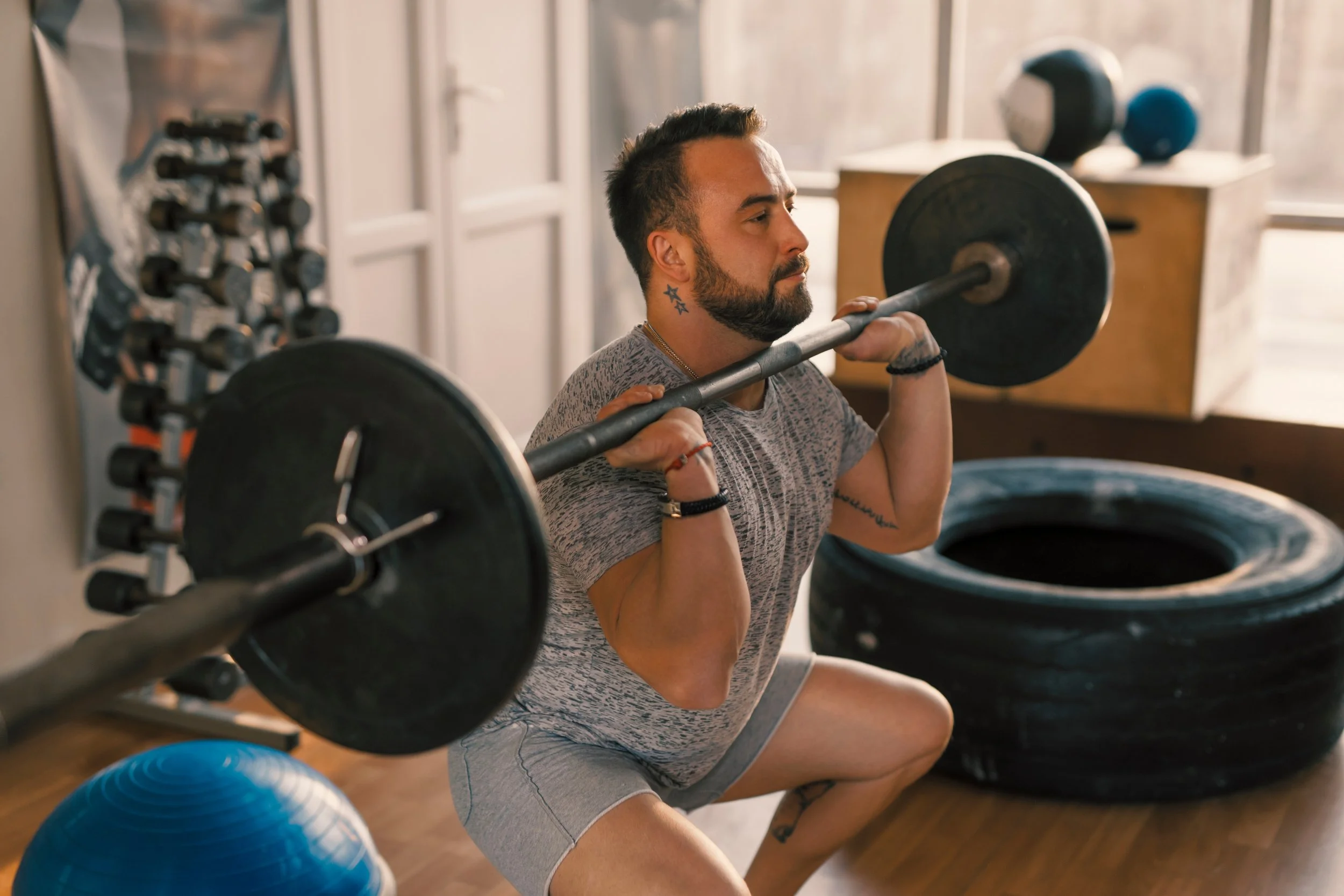
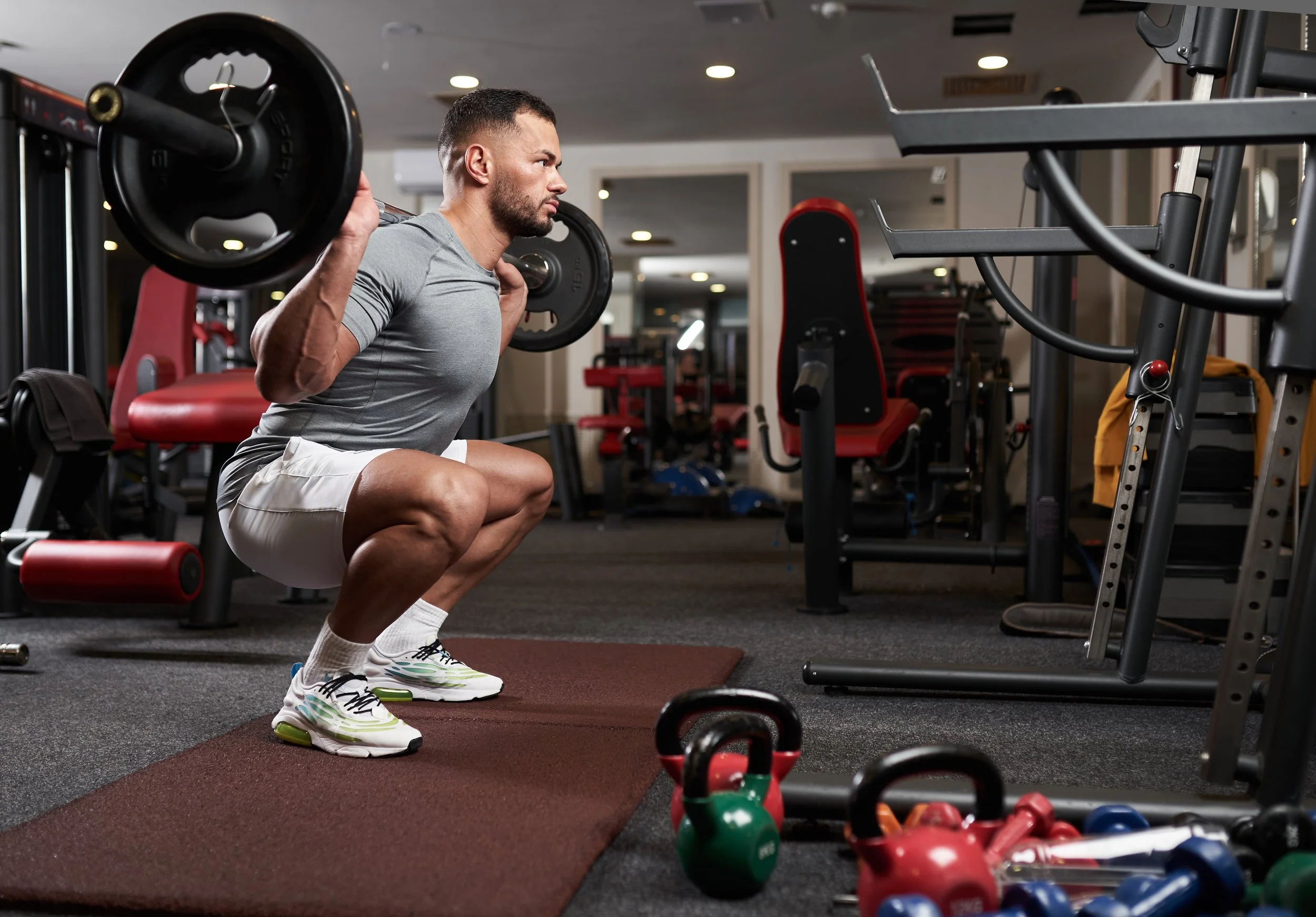
A secondary benefit arises from the simple fact that most people lift less weight when performing a front squat (left image above) than when performing a back squat (right image above). While seemingly a limitation, for individuals managing discomfort, this can be very advantageous. Lower external load means consistent demand on the quadriceps, glutes, and core while pressure on irritated tissues is reduced. This combination allows for training without exacerbating symptoms.
Knee pain is another concern that causes people to avoid squatting. The front squat provides a different mechanical environment for the knees than the back squat. The upright torso and centered hip position reduces forward knee motion common in a dysfunctional squat pattern and alters how forces are transmitted through the joint. Studies comparing front and back squats demonstrate that front squats reduce knee extensor strain and lower compressive forces on the knee, creating a more tolerable experience for individuals with patellofemoral discomfort (Russell & Phillips, 1989). Other studies highlight front squats' tendency to alter biomechanics to place fewer demands on the knee joint, a helpful adaptation for those with anterior knee pain (Straub & Powers, 2024).
For individuals with knee or back pain, front squats are most effective when approached gradually. Beginning with bodyweight, a dumbbell goblet squat, or an empty bar allows the body to learn the pattern without excessive strain.
The depth of the squat should remain within a pain-free range, and the load should increase only when technique remains consistent. When performed this way, the front squat becomes a tool for regaining strength, restoring control, and reducing the fear that often accompanies painful movement.
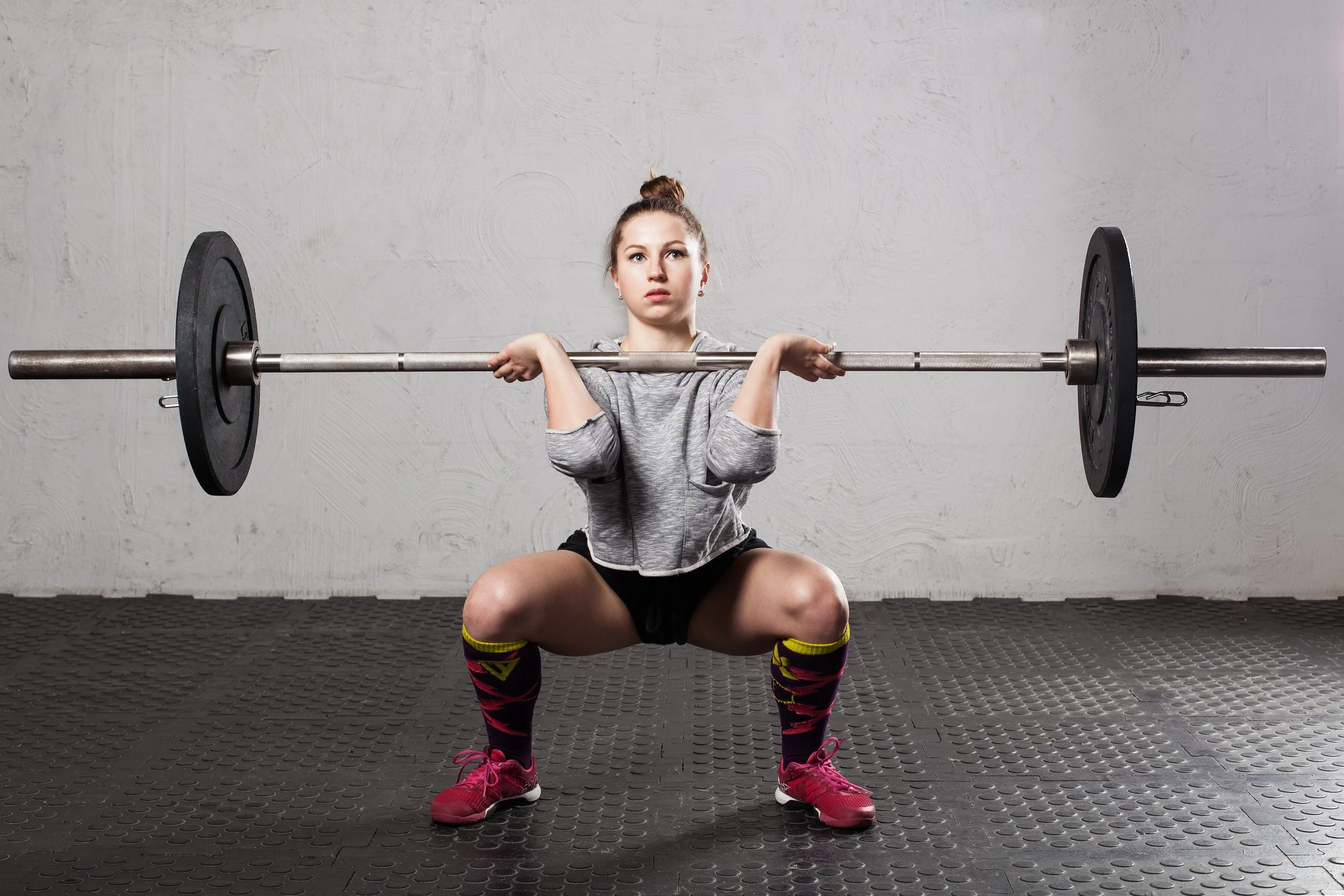
Ultimately, the front squat offers a blend of safety, stability, and strength development that makes it a powerful option for people looking to train without aggravating knee or lower-back symptoms. Its ability to reduce spinal loading (Gullett et al., 2009), alter knee mechanics (Russell & Phillips, 1989), and promote controlled movement patterns (Straub & Powers, 2024) makes it a valuable addition to rehabilitation and fitness programs. For those seeking a path back to comfortable, capable movement, the front squat offers a supportive, evidence-based starting point.
article written by Brandon Gonzales, DAT, LAT, CEAS II
