
Knee Injury Prevention
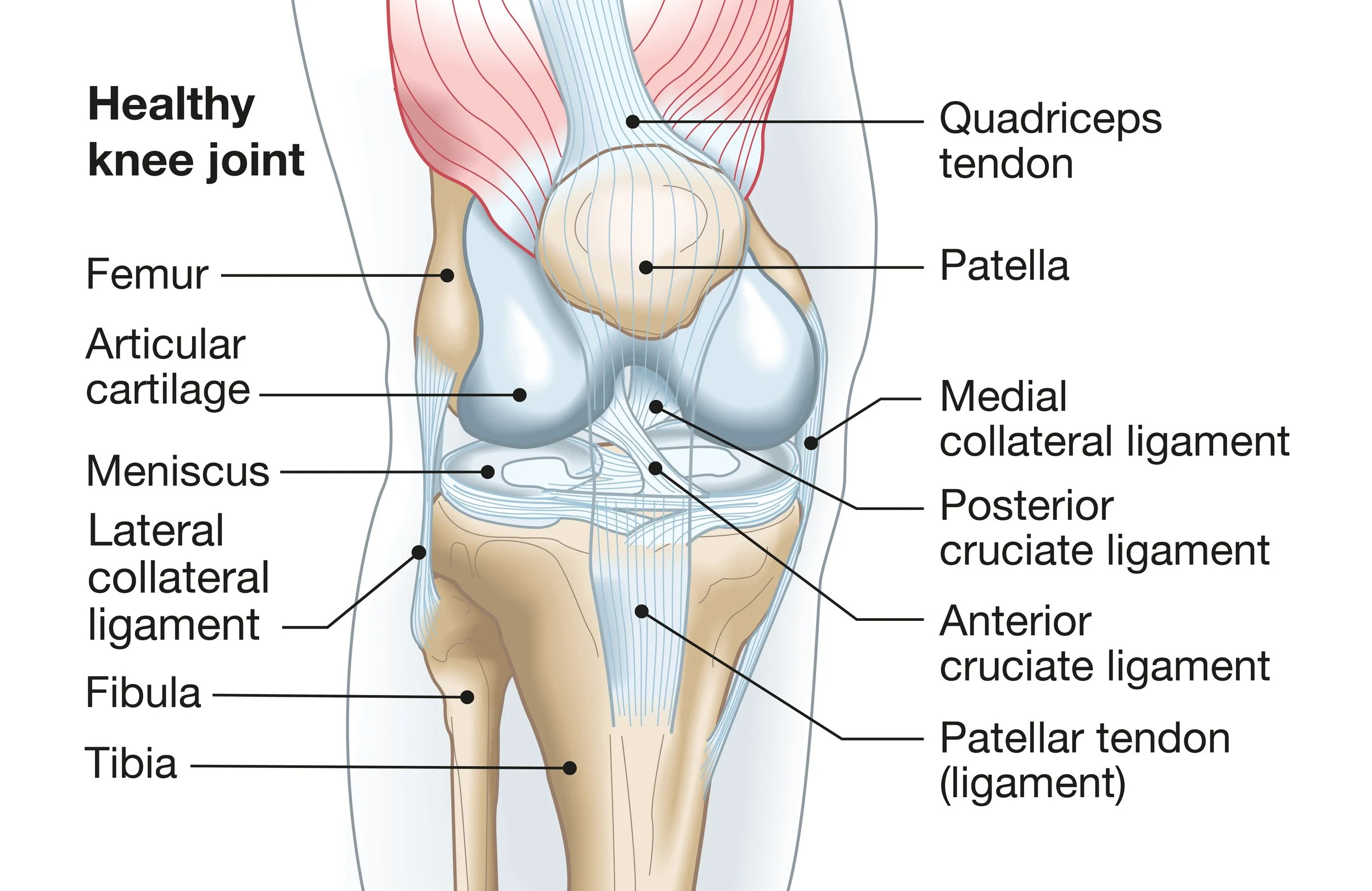
The knee is a hinge joint connecting your femur or your “thigh” bone with your tibia, or “shin bone”. The joint’s primary function is to allow the leg to straighten and bend, with minor rotation occurring to fully extend the knee in a locked position. Connecting the two bones are ligaments on the outside of the bones, called your lateral and medial collateral ligaments, and inside, your anterior cruciate ligament or ACL, and your posterior cruciate ligament or PCL. Your patella (kneecap) is connected by tendons forming the “extensor mechanism” of the knee. Your bones are covered by cartilage, which provides shock absorption and fluid motion. The knee has two crescent-shaped shock absorbers that lie between the tibia and the femur, called the medial meniscus and the lateral meniscus. The entire joint lies within a joint capsule, which encases the structures within it, like a balloon.
Several factors contribute to knee injuries. Injuries can be a single event or a degeneration over time. The cartilage that covers the joint can break down or tear. The body is unable to properly repair this tissue. This is what is referred to as osteoarthritis. This is usually a chronic condition or one that occurs over time. Other structures can be damaged in acute or traumatic injuries. An ACL tear can lead to significant knee instability. Both chronic and acute conditions and injuries are concerns for the long-term health of the knee joint.
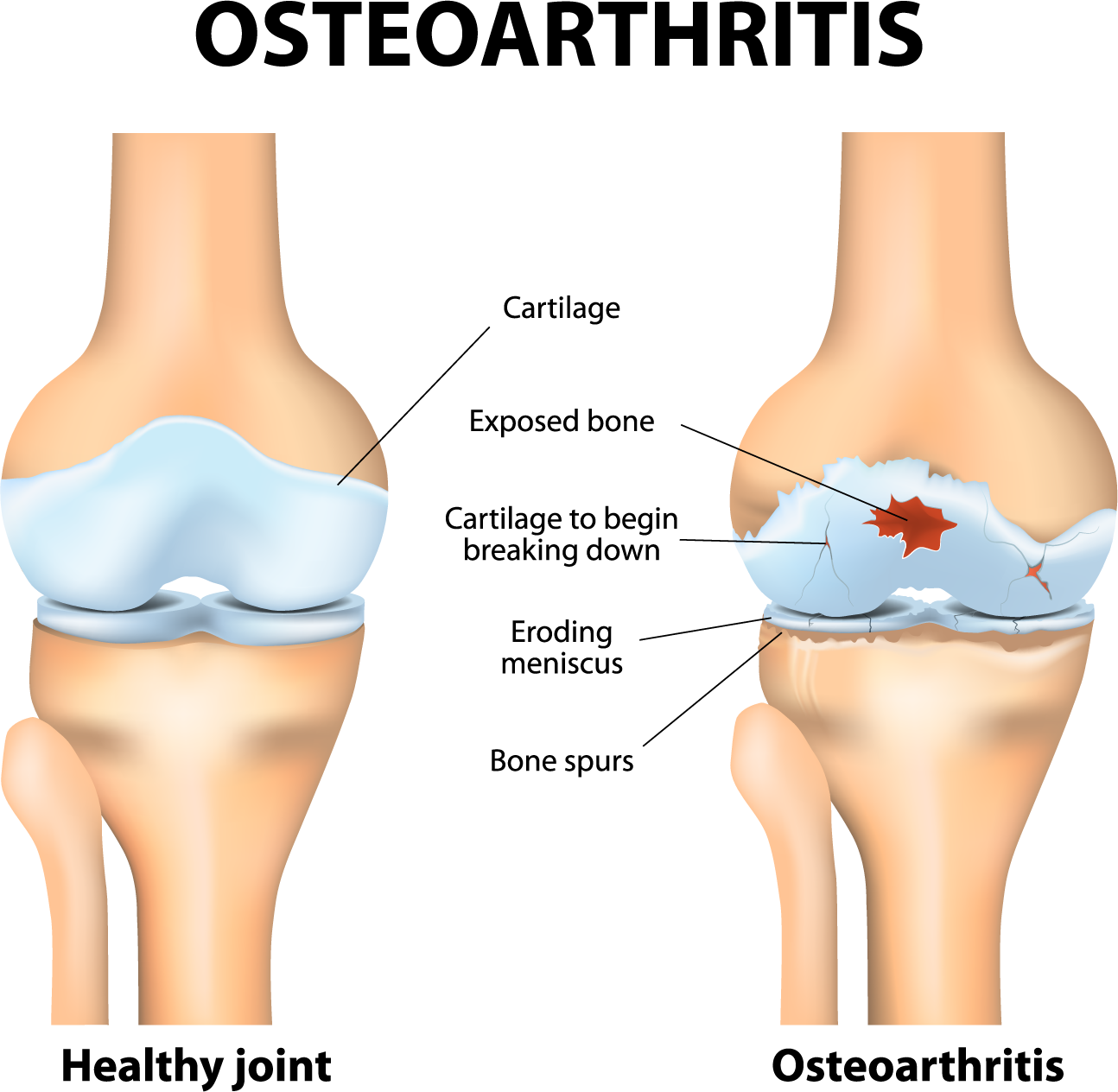
There are several things you can do to keep this joint healthy, or, if you are already experiencing symptoms of a chronic knee condition, to reduce them. Maintaining or achieving an optimal weight and body fat percentage can reduce osteoarthritis symptoms and lower the likelihood of new onset. Being overweight by 10 pounds places an additional 15 to 50 pounds of force on the joint. Fat cells also release a protein that triggers systemic inflammation, which can exacerbate joint irritation.
Evaluating and optimizing movement patterns of the trunk and the lower extremities has been shown to decrease the likelihood of knee injuries. Trunk control and stability have been shown to reduce injuries during landing or jumping. Improving hip mobility and control can decrease altered mechanics that can lead to ligament injury. Limited ankle mobility, especially in dorsiflexion, can predispose you to injury as well. A mobility program aimed at increasing ankle mobility has been shown to improve knee joint motion within 8 weeks. Foot strength and balance are often overlooked when evaluating knee stability, but they can be valuable additions to programs designed to optimize knee joint health.
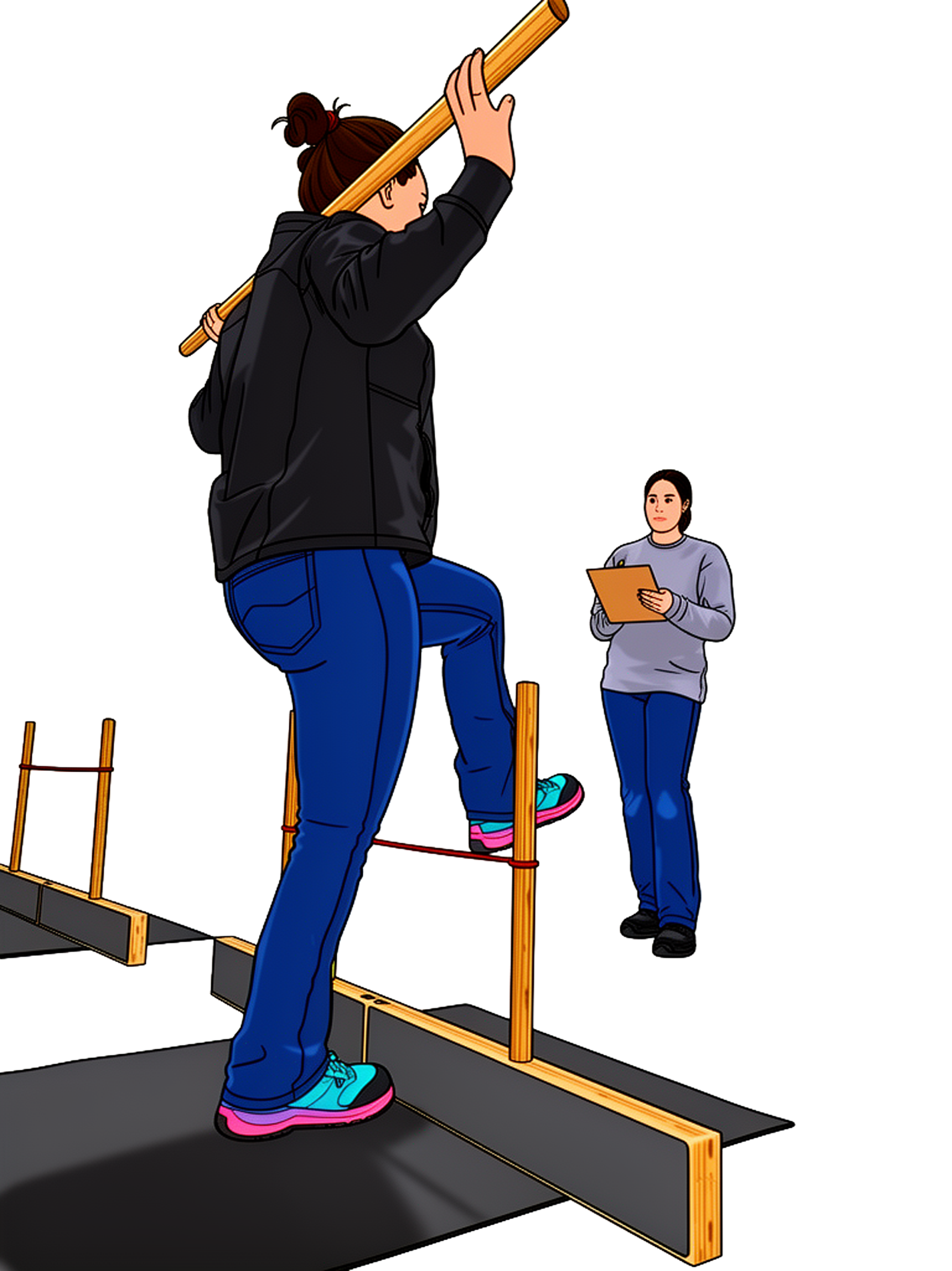
In conclusion, the knee joint allows us to run, jump, walk, kneel, and perform daily activities. Staying active and keeping your weight at optimal levels can decrease the risk of injury and can help alleviate the symptoms of injury or arthritis if they are already present. Strength, mobility, and balance also play a large role in injury prevention and should be evaluated as a whole, not just a knee-centric approach. The Functional Movement Screen (FMS), shown above, is a valuable tool for evaluating your overall movement patterns and correcting deficits. Contact your CIPS Athletic Trainer using the provided QR code to schedule this assessment and improve your movement patterns, which can reduce the risk of injury and discomfort.
Article by Sylvia Sokol Doran, LAT, ATC, CEAS II
