
Using a Sit to Stand Desk, Weekend Warrior Warning, National Athletic Training Month
Using a Sit to Stand Desk
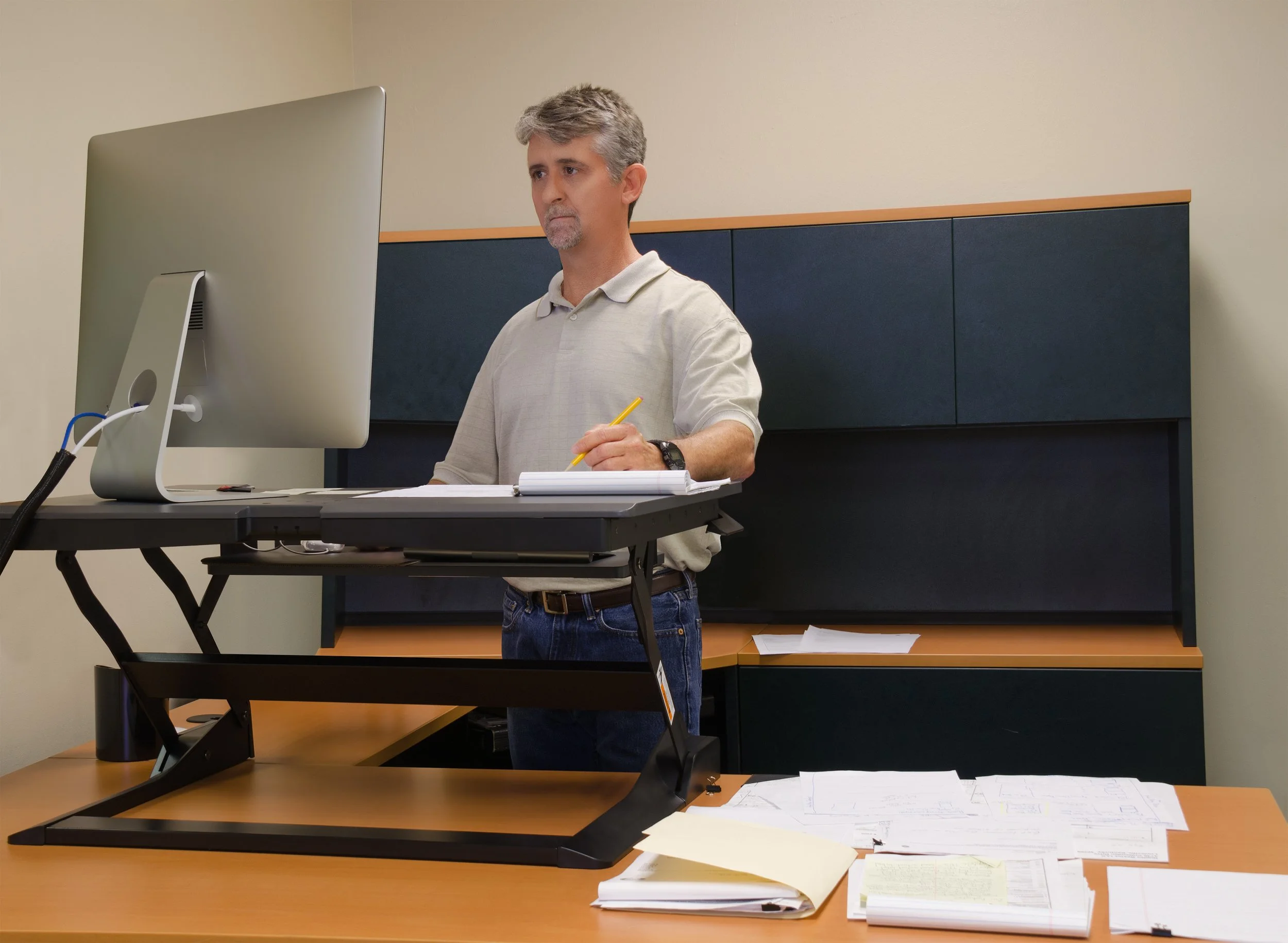
It is estimated that most Americans sit 6.5-9.5 hours per day, with most studies showing that the average American sits over 8 hours per day. This prolonged sitting increases the risk of several negative effects on your health, ranging from stiff muscles and joints and a decreased metabolism, to more serious problems such as depression, obesity, and heart disease.
Sit to Stand Setup
Once your desk is set up properly while seated, the only thing that changes is the height. Everything on the desk remains the same. Focus on getting the desk height so you can keep your elbows at roughly 90 degrees, or a right angle. This will help prevent any wrist flexion or extension while typing or mousing. To keep it consistent, once your desk is set, place a sticky note on the desk rail or the wall behind the screen so it stays at the same height every time you bring it up.
Progression is key (Do it the Right Way)
Do not think it is all-or-nothing; if you are used to sitting for most of the day, standing for 8+ hours will be very difficult. Start with short increments of 5-10 min per hour, then sit for the rest of the hour.
Each week, try to slowly add time. Setting alarms on your phone or watch to remind you to stand and sit, or just stand until you get uncomfortable. Keep in mind progress is not always linear, and ome days and weeks you may be sitting more than others. Wearing comfortable shoes will also help with the transition. Throughout the day, your feet tend to swell, and a looser-fitting shoe will allow for greater foot comfort and improved ability to stand. Anti-fatigue mats can also help.
Weekend Warrior Warning

Finding time to exercise with work, kids, and everything else in life can be pretty challenging, but weekends offer more opportunities. Weekend Warrior, a term used to describe people who lead sedentary lives during the week or most of the time but then workout or train at a high level when they have the opportunity, has both benefits and risks.
The Pros
Exercise and physical activity strengthen the musculoskeletal and cardiovascular systems, which can improve mood, boost metabolism, and help reduce the risk of heart disease and other ailments associated with a sedentary lifestyle. Studies have shown that even with short, intense bouts of physical activity, individuals can reduce their risk of heart disease by more than 50%. Exercise has been shown to improve and decrease the risk of depression by releasing serotonin to the brain.
The Cons
All forms of exercise and physical activity have an inherent risk of injury. This risk is increased with irregular training. The body gradually adapts to stress during consistent training. These adaptations are greatly reduced when training is inconsistent. Soft tissues will become weaker with decreased range of motion, leading to an increased risk of sprains and strains. The skeletal system is not as strong, increasing the risk of fractures.
Best Practice
To help reduce the risk of injury, focus on consistency and get creative with when and where you exercise. Stretching is key; increased flexibility can help reduce the risk of injury, and it can be done just about anywhere, including a chair. Incorporating basic calisthenics can also help with muscular strength and endurance. Pushups, squats, and ab work can be done quickly and just about anywhere. Just like stretching, they require no equipment and minimal space. This can even be done while sitting at a child’s practice or while food is being heated up for dinner. Getting creative to get some reps in throughout the day is better than nothing. Not every workout has to be a planned gym session or scheduled event.
National Athletic Training Month: What can your CIPS team do for you?
What is an Athletic Trainer?
Have you ever watched a sporting event and seen an athlete go down? And then see the person wearing a polo and khakis run out on the field or court? Yep, that is an athletic trainer. We are the first responders to athletic injuries, but we can do so much more. This March is National Athletic Training Month, and we want to ensure the Exelon family understands what the CIPS team can provide. Our team can help you with health and wellness goals (think fitness and nutrition), but also improve ergonomics and posture.
Why reach out?
Have you ever experienced tightness or discomfort in your neck, shoulders, or lower back? This could be due to poor posture or an improper desk setup, and we can help. The sit-to-stand desk was mentioned above, and we can ensure a proper desk setup to help reduce stress on the body. Ever wanted to get started exercising or make better nutritional choices, but did not know where to begin? We can help with all of these things. Use the QR code below to schedule an appointment with us, and we can meet with you in person, virtually, or by phone. Our team is ready to help you with workstation setup and ergonomics, identify the cause of those tight muscles, and help you reach your health and fitness goals. CIPS is here for you, so you can feel your best and be your best both at work and at home.
