
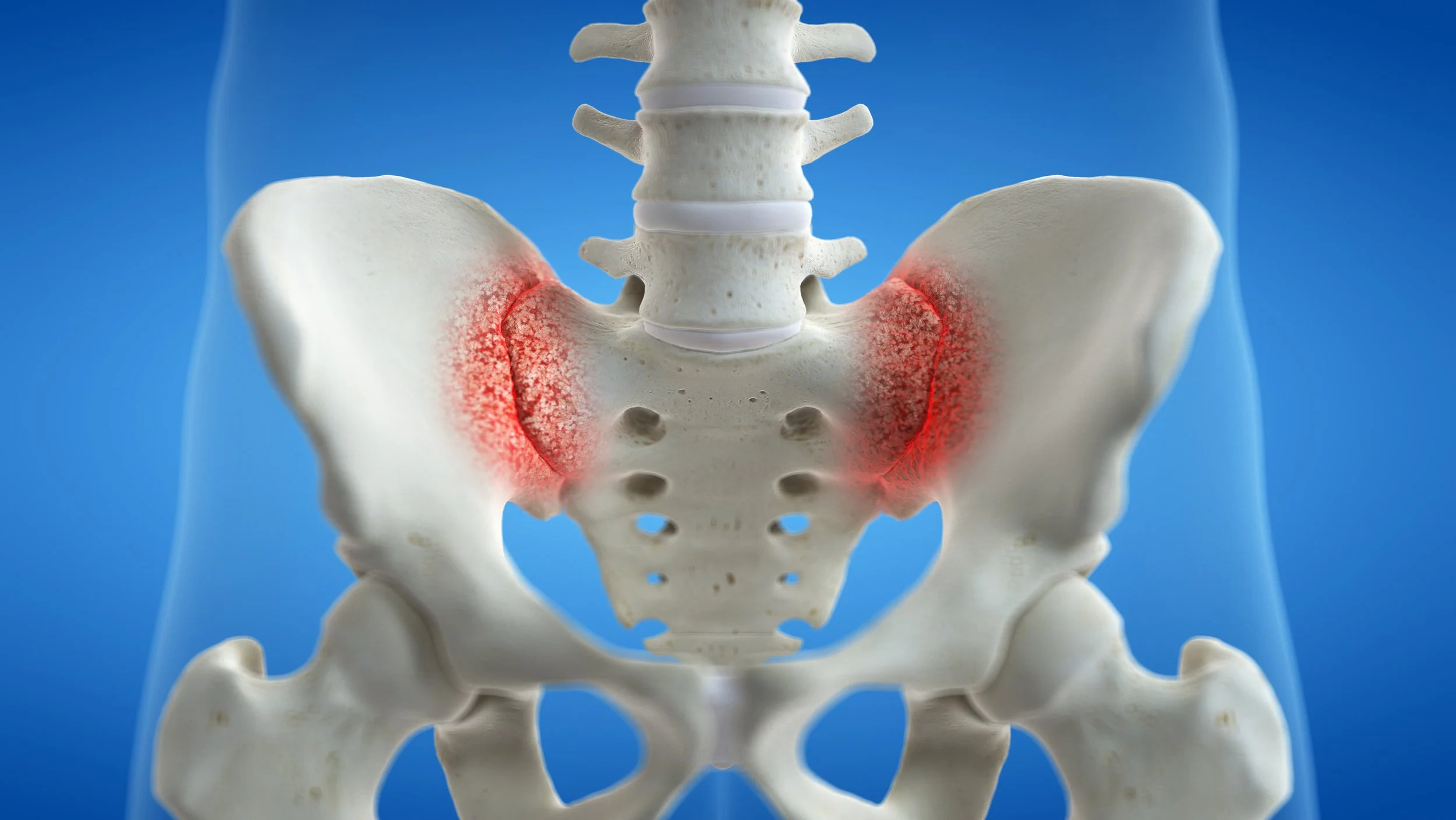
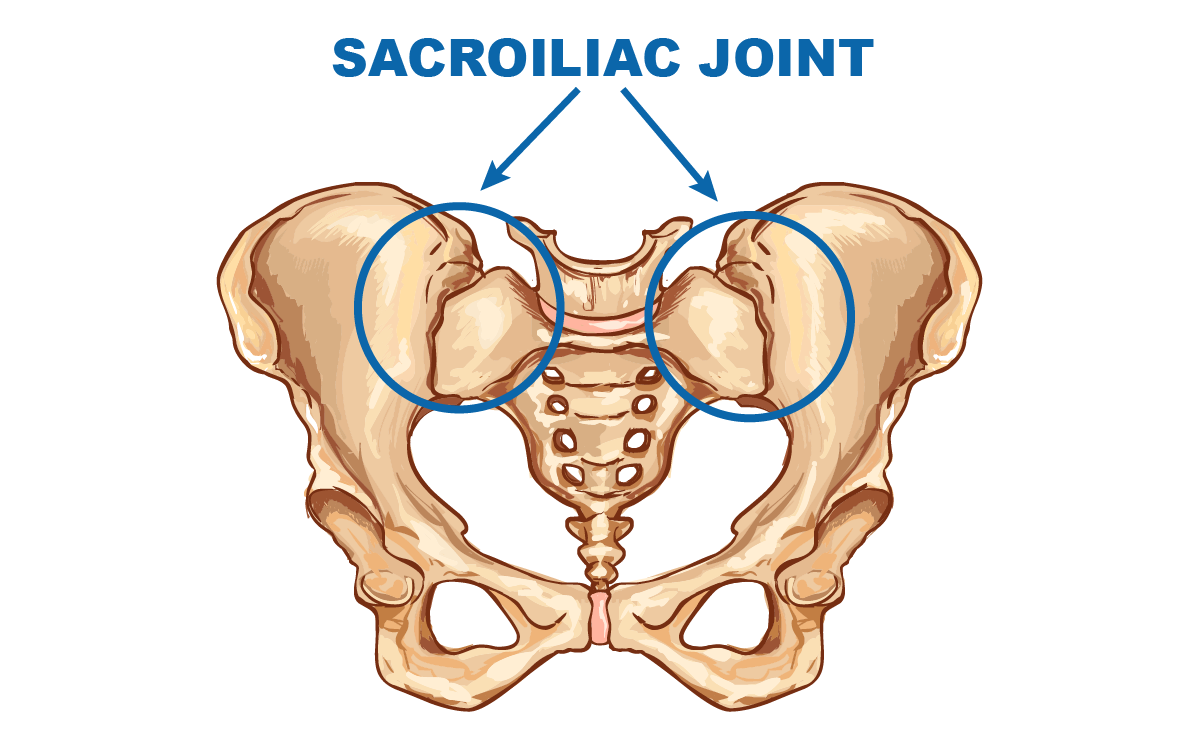
The sacroiliac (SI) joint is located in the lower back, where the spine meets the pelvis (hip bones). It provides a connection between the two portions of the ilium: the pelvis and the sacrum. The primary role of the SI joint is to support the spine by transferring forces between the spine and the lower extremities. It cushions the forces applied to the spine and helps to manage and control torque in the legs. Given its role, the joint is designed to allow limited movement but high stability. The SI joint allows very small up-and-down movements and a tiny amount of rotation in each direction. As we age, the SI joint surfaces become more angled, losing their flat surfaces and allowing functional interlocking between the 2 bones. This interlocking limits movement at the SI joint while increasing stability. The SI joint is also supported by multiple ligaments that provide stability and limit complete free movement of the joint.
The sacroiliac joint accounts for approximately 16% to 30% of cases of chronic mechanical low back pain. However, SI joint pain can be difficult to accurately diagnose due to referred pain patterns. SI joint pain is commonly felt in the buttocks, lower back, groin, and outer thigh. The pain can be dull and achy, or sharp, and may be accompanied by tingling or numbness in the leg or buttocks. SI joint dysfunction refers to abnormal biomechanical function at the joint, which can lead to pain and discomfort. This can include mobility changes due to repetitive movements or postures, injuries from falls or other trauma, hypermobility from pregnancy and other conditions, and degeneration from abnormal walking patterns, leg-length discrepancies, and osteoarthritis.
While not all SI joint-related discomfort can be prevented, there are some things you can do to reduce your risk of developing it. First, maintaining a healthy weight can reduce forces on the SI joint and other joints in the pelvis and lower back. Secondly, prioritizing regular physical activity, especially walking and other low-impact activities, encourages healthy joint movement. Regular stretching and activities like yoga and pilates can help maintain and improve mobility while increasing strength. Muscles commonly found to be weak in people with SI joint pain include the gluteus medius, gluteus maximus, lower abdominals, and hamstrings. Strengthening these muscles may help reduce the onset of discomfort. Finally, practicing good ergonomics can help reduce awkward or prolonged postures and limit improper lifting techniques, reducing traumatic changes to the joint.
Interested in learning more about the SI joint and how to reduce your risk of injury? Consider reaching out to a CIPS Athletic Trainer for further discussion to help determine your individual needs.
Article Written By Meghan Del Valle, MS, LAT, ATC, CEAS II
